

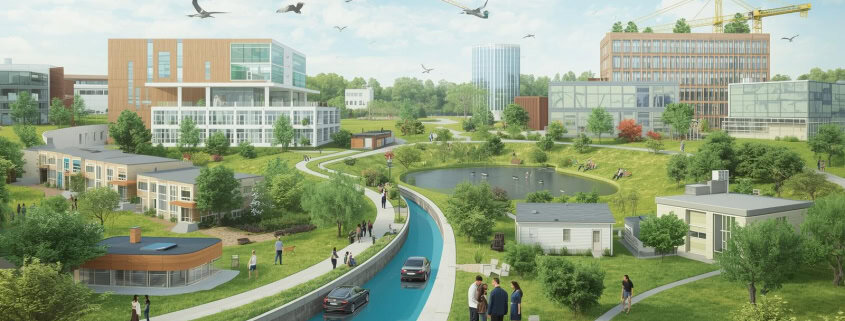
According to the World Economic Forum, adopting circular practices in construction could cut sector emissions by up to 75% by 2050. Circular economy practices in buildings are no longer optional—they’re central to meeting climate goals, reducing embodied carbon, and creating resilient communities. By maximizing the value of resources and extending product lifecycles, organizations cut emissions, reduce risk, reinvest locally, create jobs, and unlock significant savings.
Join USGBC Virginia to discuss circular economy practices in the built environment. Adaptive reuse and comprehensive life-cycle planning aren’t just good for the planet; they deliver measurable value for companies and communities. USGBC’s LEED v5 and TRUE rating systems provide comprehensive frameworks to support teams in establishing circular economy practices and demonstrating measurable progress, transparency, and accountability.

